









Introduction
Brief overview of the challenge: complexity in modern environments
In today’s digitalization, modern applications are increasingly built using microservices and cloud-native architectures, aiming to provide access for users and customers from anywhere, at any time.
This inherently distributed nature makes it difficult to track service requests as data and processes traverse multiple services. In this context, traditional infrastructure monitoring struggles to deliver a complete view of system behavior. That’s why distributed tracing helps developers and IT administrators visualize the full journey of requests and makes it easier to identify performance, potential bottlenecks, and failures—as well as when they occur.
What is distributed tracing?
Functional and technical definition
Distributed tracing makes it possible to observe data requests as they flow through a distributed system. Modern microservices architectures consist of diverse, independent components where data exchanges happen through APIs. Functionally, distributed tracing enables continuity of tracking because each request has a unique trace ID across multiple services; it can establish span hierarchies within a service; it leverages tracing libraries (e.g., OpenTelemetry, Jaeger) to collect trace data; and it integrates contextual logging (combining logs and metrics), providing full observability. In addition, traces can be recorded based on predefined rules.
From a technical standpoint, distributed tracing helps you understand how requests flow through distributed systems; it allows bottlenecks and potential latency to be identified; it pinpoints failures and accelerates debugging. It can also be used for resource allocation based on information about dependencies and load distribution. Moreover, it fosters team collaboration by tracking interactions between services and the owners of those services.
Differences from traditional logging and metrics
Tracing is the bridge between traditional logging, metrics, and distributed tracing. To understand their differences, the depth of insight, and how they complement each other, the following table illustrates it clearly.
Table – Differences between distributed tracing, traditional logging, and metrics
|
Objective |
Depth level / highest effectiveness |
Use case |
|
Distributed tracing |
Tracks requests across multiple services, providing end-to-end visibility. Captures detailed interactions between services, showing latency and dependencies. |
Diagnoses performance bottlenecks and service failures in distributed systems. |
|
Logging |
Records system events, errors, and activities. Provides historical context for debugging but does not offer visibility across multiple services. |
Error tracking, auditing, and forensic analysis. |
|
Metrics |
Monitors system health by collecting numerical data. Aggregates data over time (historical), supporting trend analysis and alert generation. |
Detect anomalies and predict failures before they occur. |
As you can see, all of them provide useful findings for your team. However, logs and metrics alone are not sufficient to understand what is happening within the complexity of distributed systems. Traces are information resources that enhance observability through correlation and context, linking resources, services, and dependencies. Thus, distributed tracing is a powerful capability to understand complex service interactions in modern architectures to achieve stable systems and better experiences for users and customers.
How distributed tracing works
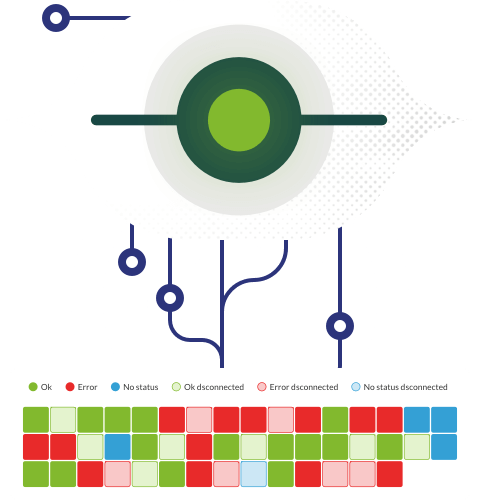
Distributed tracing provides visibility into how different microservices interact, based on the components reflected in the following diagram:
- Trace initiation: When a user makes a request, it generates a unique trace ID that follows the request across multiple services.
- Span creation: Each service the request interacts with creates a span, representing a single operation (examples: a web page query, database access, API calls). Spans form a trace, which shows the full journey of the request.
- Context propagation across services: The trace ID and span data are transmitted between services via headers in network requests, ensuring continuity and allowing observability tools to reconstruct the request flow.
- Data collection and visualization (telemetry): Tracing tools collect span data such as latency, errors, and dependencies. The trace is visualized as a flame graph, timelines, or waterfall charts to help your engineering team identify bottlenecks.
- Troubleshooting and optimization: With these insights, your team can identify services exhibiting latency, failures, or inefficient interactions. This information is also valuable for defining strategies in IT project management to optimize performance, improve reliability, and streamline debugging.
Figure – How Distributed Tracing Works

Distributed tracing in microservices architectures
Why microservice tracing is essential
Distributed tracing helps developers and system administrators visually follow the path of requests across different microservices. This visibility enables teams to correct errors and performance issues that could ultimately impact customer experience.
End-to-end tracing
Distributed tracing enhances comprehensive monitoring with full visibility into complex, distributed systems by leveraging unified observability (integrating logs and metrics) and context propagation across all microservices, facilitating end-to-end request tracking. It also helps optimize performance by identifying bottlenecks and latency issues throughout the request lifecycle. All this information helps engineers detect failures faster by correlating traces with logs and metrics.
Common use cases:
- API gateways: An application user makes a request, and the gateway forwards it to different services while assigning a trace ID to the request. Each microservice involved creates spans to track execution time. The trace is propagated between services via headers. With this, distributed tracing provides engineers with comprehensive visibility into potential bottlenecks.
- Message queues: In application monitoring such as email dispatching, distributed tracing allows analysis of how long processing takes and, based on that, defines strategies to optimize message delivery.
- Serverless functions: In serverless environments, where execution is ephemeral, debugging performance issues can be a challenge for your team. Here distributed tracing provides end-to-end visibility of the request flow across different services.
Advantages of distributed tracing
- Detection of bottlenecks and errors: With complete end-to-end visibility, distributed tracing enables visualization of each service’s response time, helping to quickly detect where delays and potential bottlenecks are generated.
- Reduction of MTTD and MTTR: For failure detection (MTTD, Mean Time to Detect), distributed tracing provides real-time visibility into requests and their interactions across microservices, helping identify anomalies and failures quickly. For issue resolution (MTTR, Mean Time to Resolve), distributed tracing helps locate the failure precisely by showing which service or component is causing the error or requires patching.
- Improved SLAs, performance, and user experience: Distributed tracing helps monitor uptime and Service Level Agreement compliance by detecting response times and availability in real time. By reducing load times and errors, user perception of speed and reliability improves, resulting in a better experience.
- Cross-team collaboration (DevOps, SRE, QA): Full visibility enables a shared view across your company’s teams regarding system performance and stability. In DevOps, it helps detect issues in deployment and software optimization; in SRE (Site Reliability Engineering), it helps identify bottlenecks and improve resilience by leveraging detailed trace analysis.
Challenges and limitations
- Manual vs. automatic instrumentation: Implementing and maintaining distributed tracing requires instrumenting each service, which can be complex and time-consuming. Also consider that most (or all) legacy systems don’t support automatic instrumentation, which may demand manual changes.
- Cost and data volume: Capturing traces for each request can generate an overwhelming volume of data, impacting system performance as well as your team’s time and resource costs.
- Sampling issues and incomplete context: Due to the high volume of trace capture, sampling strategies must be applied to avoid overload, which may imply loss of relevant information or incomplete context. In addition, automatically collecting data and integrating it across multiple services and tools—beyond being complex—can expose sensitive information if not properly managed.
How distributed tracing integrates with Pandora FMS
Pandora FMS can integrate with distributed tracing solutions such as Jaeger or OpenTelemetry to incorporate traces into its monitoring console. Although it does not generate or instrument traces by itself, it allows representing them as operational data that complements information from logs, metrics, and events.
Thanks to this integration, Pandora FMS provides:
- Correlation of traces with logs and metrics: Offers a contextual view of each incident, relating the trace to the data already collected in the system.
- Unified visualization in dashboards: Displays traces alongside other key indicators such as availability, resource usage, or the status of critical services.
- Integration with alerting and ITSM workflows: Allows relevant traces to trigger alerts or be automatically associated with incident management processes.
This capability reinforces Pandora FMS’s approach as a centralized observability platform (Single Pane of Glass), especially useful in environments where different instrumentation and monitoring systems coexist.
Conclusion
Before embarking on distributed tracing, it’s essential to understand your business needs and priorities, aligning this practice with your performance and user-experience objectives. Consider the challenges of instrumentation, cost, and data volume, as well as integration with your current monitoring systems. With a correct implementation—supported by tools like Pandora FMS and its integration with distributed tracing solutions—you’ll gain a unified view, optimize performance, and reduce the time to detect and resolve incidents.
We invite you to consult with Pandora FMS experts on best practices to implement distributed tracing in your organization. Click here.
Contact the sales team, ask questions about our licenses, or request a quote
