
12. How to use Pandora FMS plugins
Plugins allow Pandora FMS to obtain information that requires complex processing or the use of complex systems or APIs. Examples of plugins include MySQL® database monitoring or packet loss between devices.
This quick guide will show examples of plugins that are included by default in Pandora FMS. There is also the possibility of creating our own server and EndPoint plugins.
Server Plugins
Pandora FMS includes several ready-to-use plugins by default. To view the server plugins registered in Pandora FMS, go to Management → Servers → Plugins. These types of plugins only return a single value.
These plugins are stored in the /usr/share/pandora_server/util/plugin/ directory and are executed by the PFMS Server.
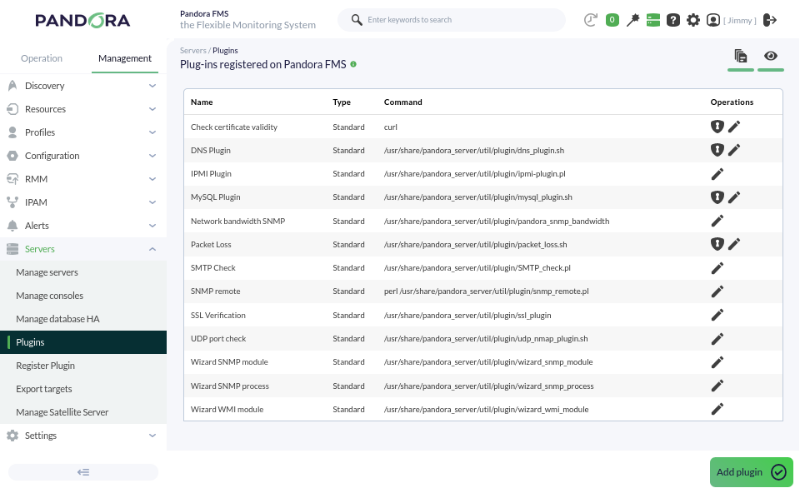
To use these types of plugins, the plugin server must be enabled in the /etc/pandora/pandora_server.conf file under the heavyserver 1 token.
To create a remote plugin-type module, access the agent editor and go to the Modules tab:
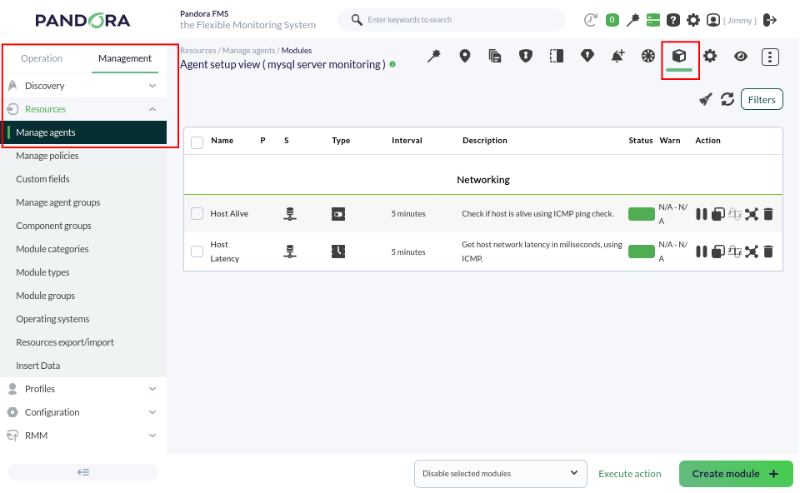
Create a Plugin module:
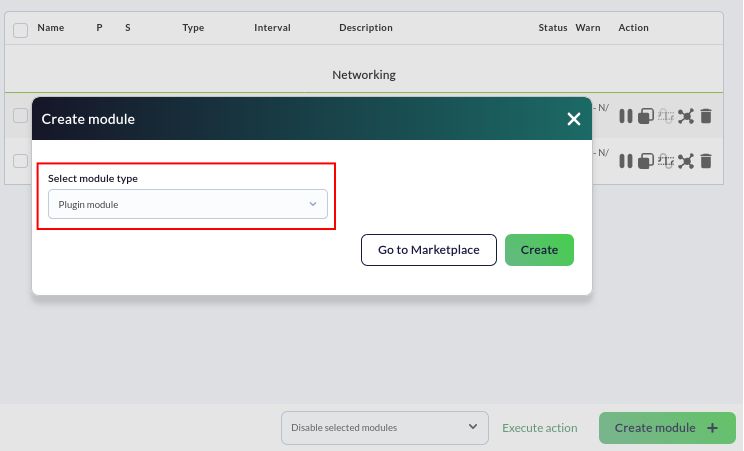
It is generally configured in the same way as any other type of remote module. In this module type, we have a Plugin drop-down menu that allows us to choose the plugin to be used.
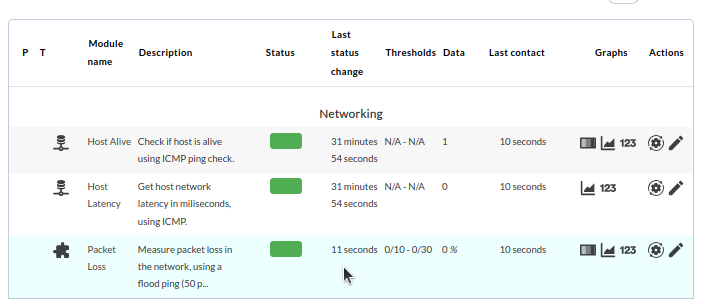
In this example, the Packet Loss plugin is used to check the amount of packets lost over a period of time between the server and the destination.
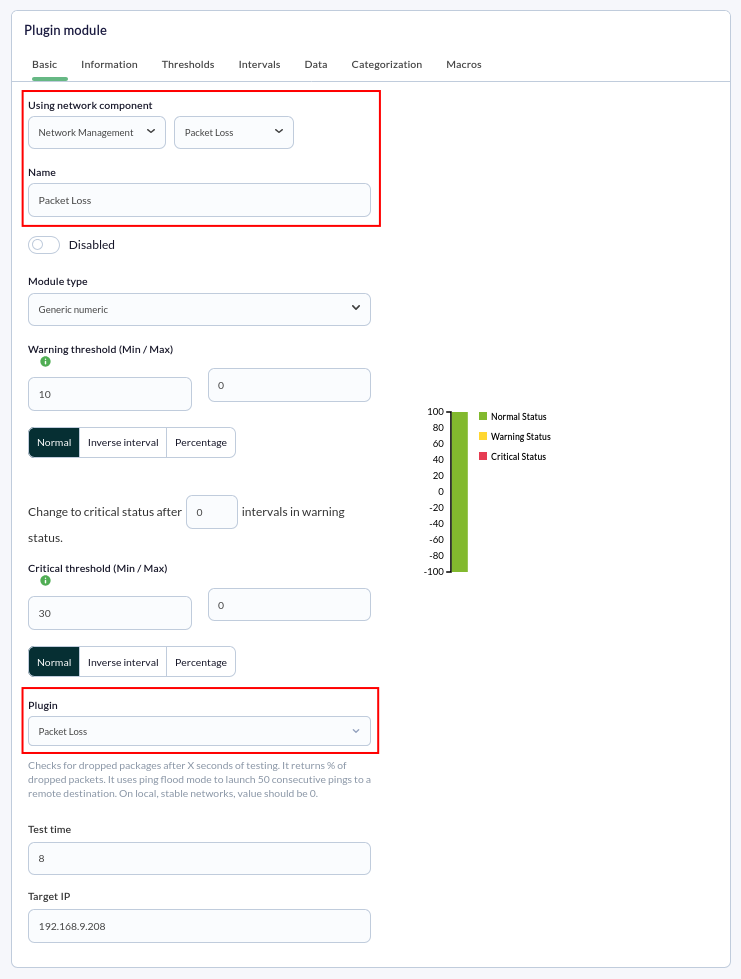
Fill in the fields with the necessary information; for the Packet Loss plugin, we define the test time and the destination IP address.
A few seconds after creating the module, the module and its obtained value will appear in the agent view:
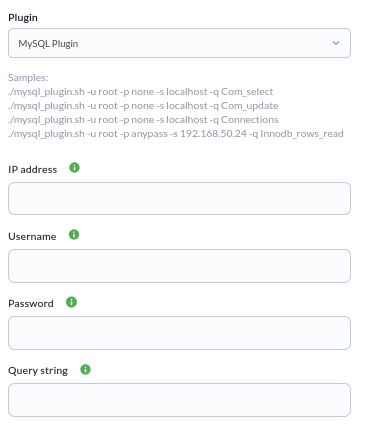
Depending on the plugin, different specific fields will need to be filled in. For example, for the MySQL plugin, you must define the MySQL server IP address, the username and password, and the data you wish to extract:
Agent Plugins
GNU/Linux®
These types of plugins are stored and executed from an EndPoint and can return more than one value.
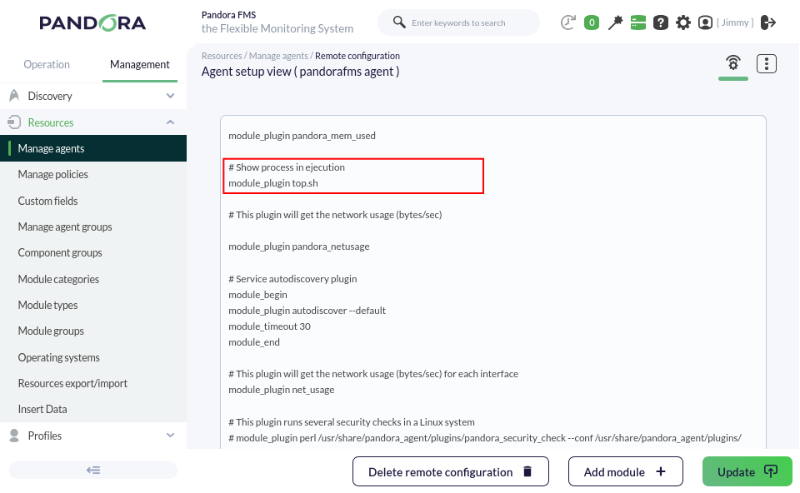
These plugins are stored in the local agent's /usr/share/pandora_agent/plugins/ directory and are defined in the /etc/pandora/pandora_agent.conf configuration file.
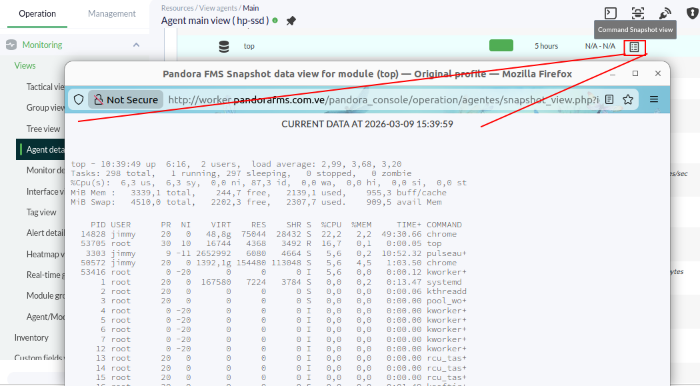
Some agent plugins are defined by default in the configuration file. In this example, a plugin called top.sh is used, which shows the processes running on the agent.
To see the created module and its value (or values, depending on the plugin), go to the Agent view (for the EndPoint) in the Web Console.
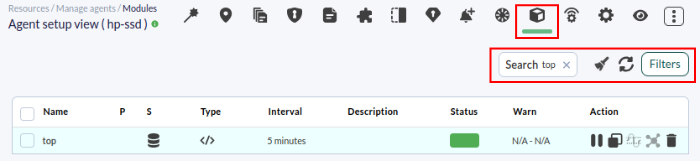
Notice that the obtained data is shown as a paper-sheet-shaped icon. Click on that icon to display the list of processes extracted from the computer via the agent plugin.
MS Windows®
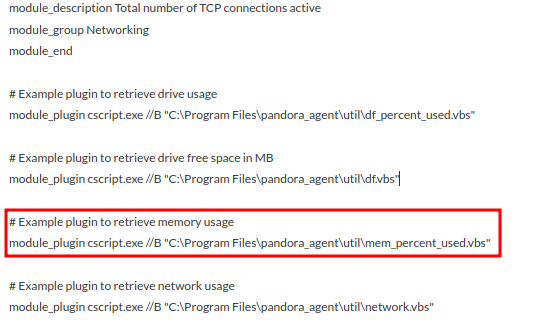
Plugins are stored in the %ProgramFiles%\pandora_agent\util\ directory and are defined in the %ProgramFiles%\pandora_agent\pandora_agent.conf configuration file.
Just as in Linux®, there are some examples of plugins defined in the configuration file.
Are you not achieving the results explained in this chapter? Access the help or support section.