
Discovery
This plugin can be integrated with Pandora FMS Discovery.
To do so, load the ".disco" package mustthat be loaded. Ityou can be downloadeddownload from the Pandora FMS library:
https://pandorafms.com/library/
Once loaded, HAProxyNGINX instances can be monitored by creating Discovery tasks from the Management > Discovery > Application > HAProxyNGINX section.
EachFor each task will require the following minimum data will be requested in the HAProxyNGINX Basic step:
-
HAProxyNGINXStatsStatus URLs:HAProxyNGINXstatsstub_status endpoint URLs,comma-separated by commas or one per line. Each URL willcreategenerateonean agent. -
Username:
HAProxyusername for the NGINX endpointuserififit requires HTTP basicauthentication is required,authentication, optional -
Password:
HAProxypassword for the NGINX endpointpasswordififit requires HTTP basicauthentication is required,authentication, optional -
Verify SSL:
enabledactive if the URLhas anSSL certificate needs to be verified,disabledinactive by default - Transfer mode: transfer mode (native or tentacle), optional
- Tentacle IP: tentacle IP, optional
-
Tentacle port:
Tentacletentacle port, optional
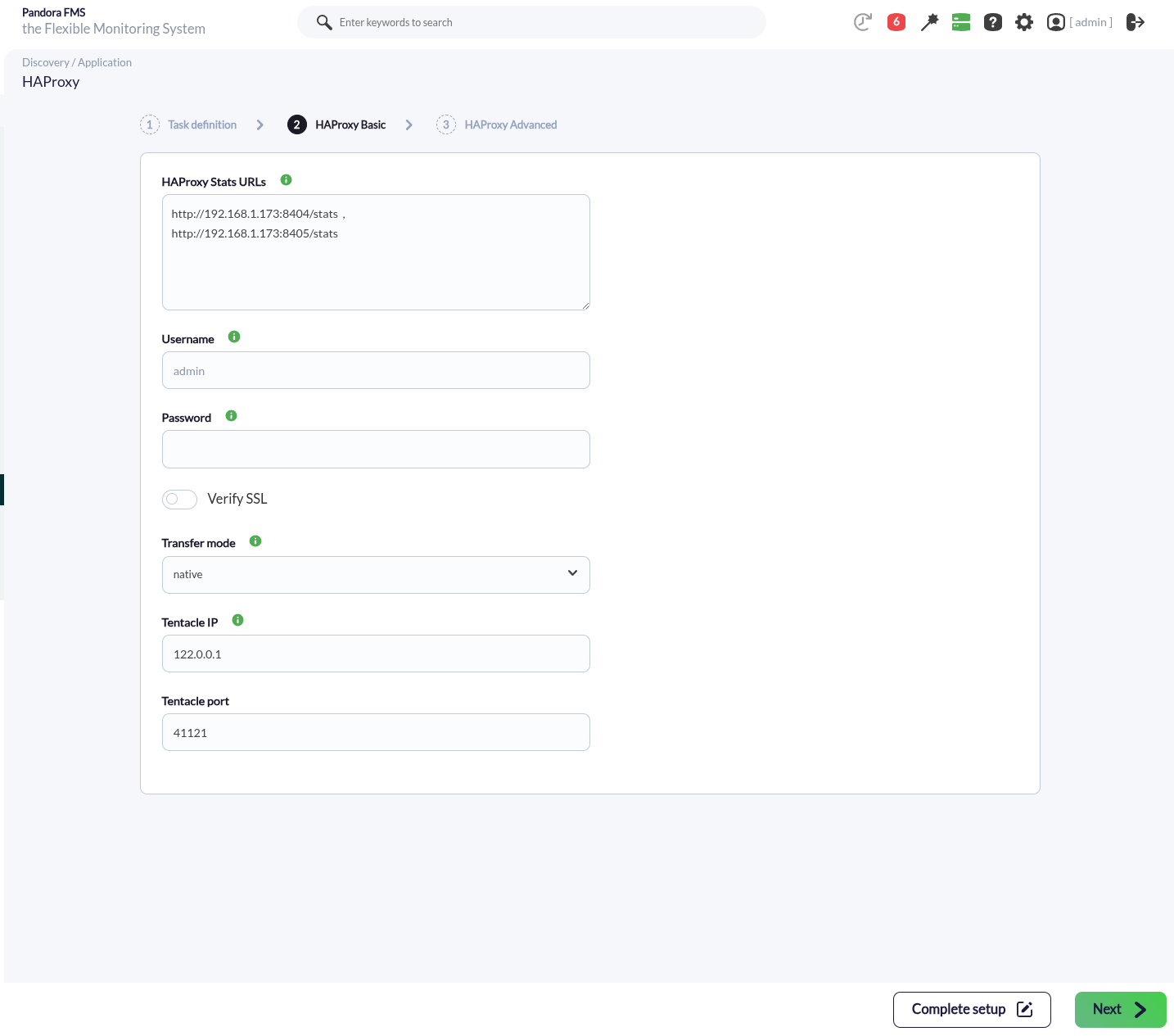
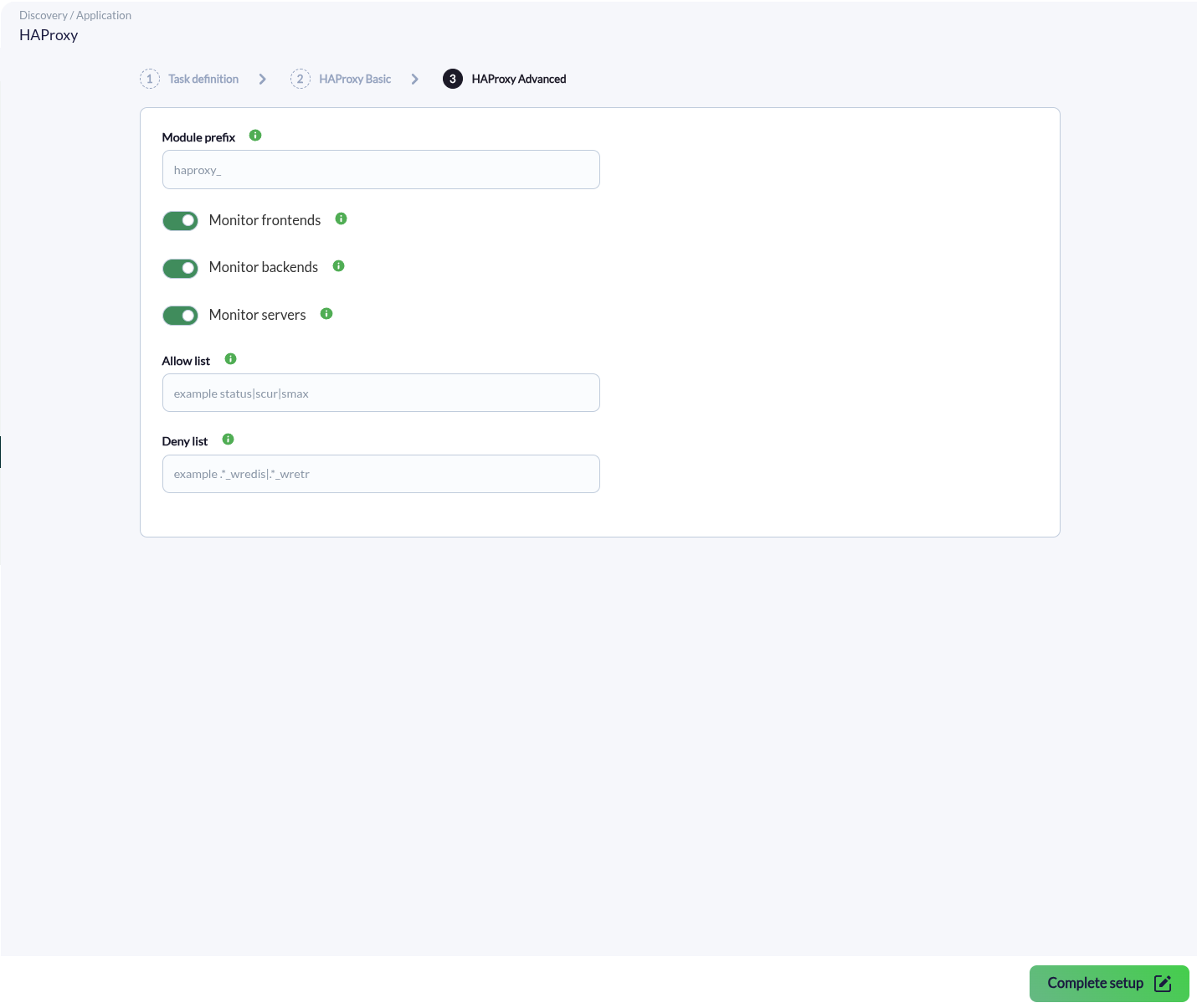
In the HAProxyNGINX Advanced step the following additional options can be configured:
-
Module prefix: prefix to
be addedadd toeveryall created modulename,names, optional -
MonitorRequestfrontends:timeout:enablesmaximummonitoringwaitoftimefrontendforrowsthe HTTP request in seconds, optional (type=0),defaultoptional Monitor backends:enables monitoring of backend rows (type=1), optionalMonitor servers:enables monitoring of server rows (type=2), optional10)- Allow list: regular expression to include only modules whose name matches, optional
- Deny list: regular expression to exclude modules whose name matches, optional
Successfully completed tasks will haveshow an execution summary with the following information:
- Total agents : Total number of agents generated by the task.
- Total modules: Total number of modules generated by the task.