
Discovery
This plugin can be integrated with Pandora FMS Discovery.
To do this, you must load the “.disco” package, which you can download from the Pandora FMS library.
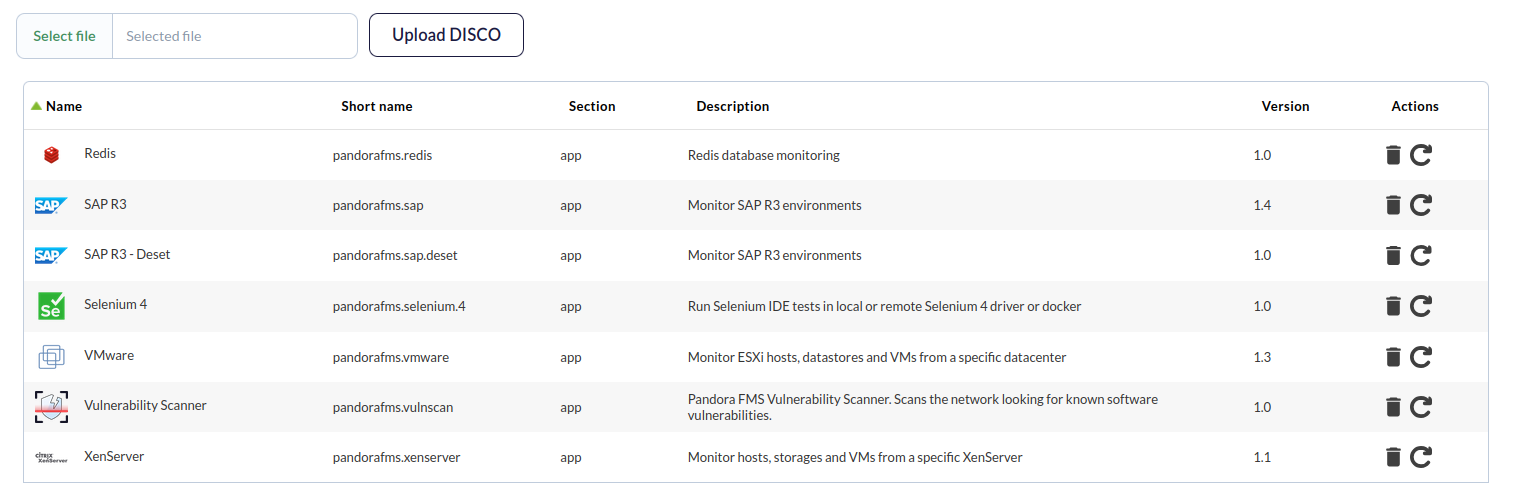 Once loaded, Microsoft SQL Server environments can be monitored by creating Discovery tasks from the Management > Discovery > Applications section.
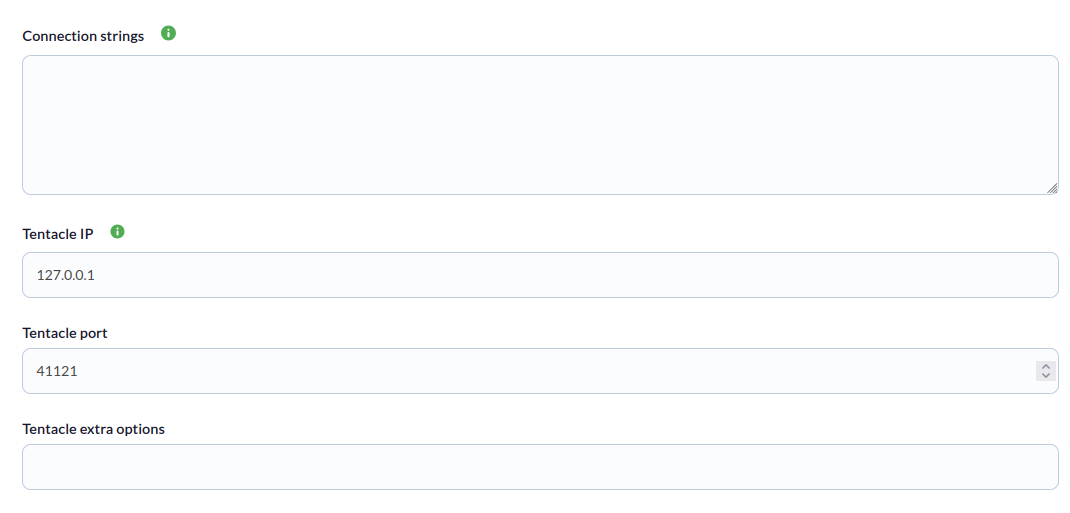
For each task, the following minimum information will be requested:
- Connection strings:
host='172.17.0.2', port=6379|redis_agent - Tentacle IP: IP address of the Tentacle server to which agent data should be sent. Normally, this parameter will not be modified.
- Tentacle Port: Port of the Tentacle server to which the data should be sent. Normally, this parameter will not be modified.
- Tentacle extra options: Additional options for sending data using the Tentacle client. Normally, this parameter will not be modified.
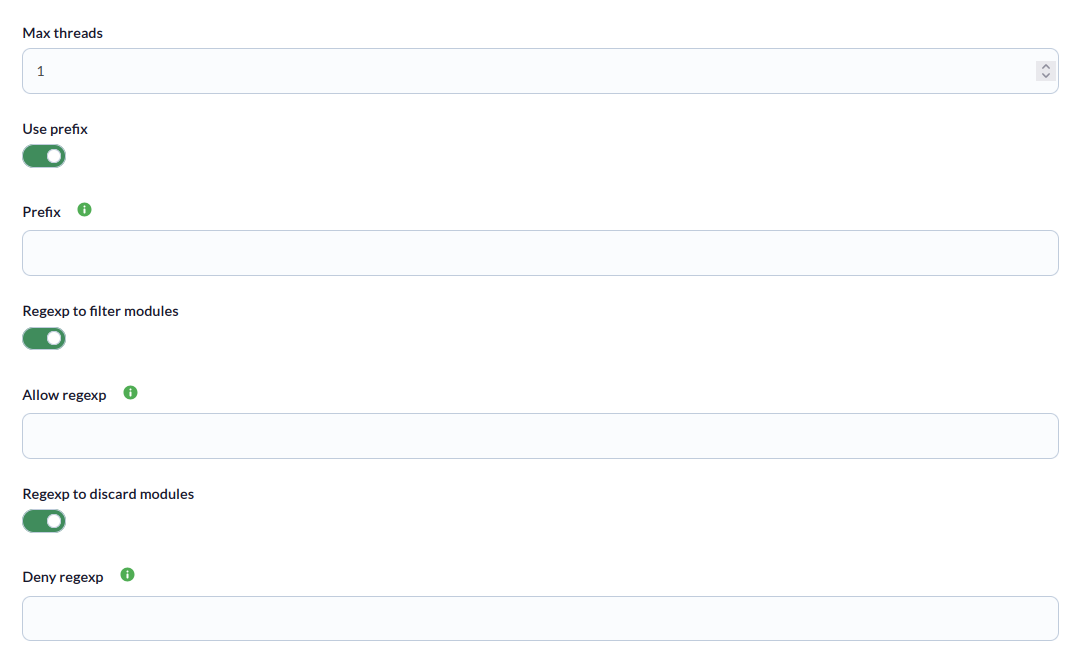
También se podrá ajustar la configuración de la tarea para personalizar la monitorización deseada:
- Max threads: To optimize execution time, multiple threads can be configured to monitor task agents. Keep in mind that configuring multiple threads can increase the CPU usage of the task.
- Use prefix for modules: Enable this token to specify a prefix.
- Prefix for modules created: Specify a prefix that will be added to the agents modules created.
- Use prefix for agents: Enable this token to specify a prefix.
- Prefix for agents created: Specify a prefix that will be added to the agents created.
- Regexp to filter modules: Enable this token to specify a regexp pattern for filtering.
- Allow regexp: Regex value; only modules that match this pattern will be created.
- Regexp to discard modules: Enable this token to specify a regexp pattern to discard.
- Deny regexp: Regex value, modules matching this pattern will be discarded.
-
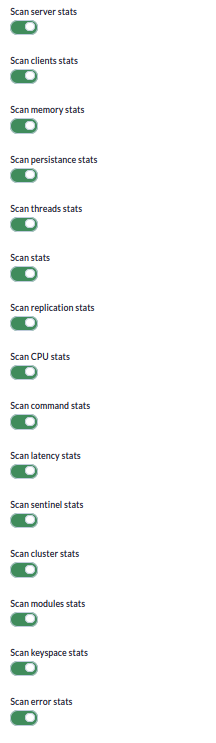
Scan server stats : If enabled, it will monitor server statistics.
-
Scan clients stats : If enabled, it will monitor client statistics.
-
Scan memory stats : If enabled, it will monitor memory statistics.
-
Scan persistance stats : If enabled, it will monitor persistence statistics.
-
Scan threads stats :If enabled, it will monitor thread statistics.
-
Scan stats : If enabled, it will monitor general Redis statistics.
-
Scan replication stats : If enabled, it will monitor replication statistics.
-
Scan CPU stats : If enabled, it will monitor CPU statistics.
-
Scan command stats : If enabled, it will monitor command statistics.
-
Scan latency stats : If enabled, it will monitor latency statistics.
-
Scan cluster stats : If enabled, it will monitor cluster statistics.
-
Scan modules stats : If enabled, it will monitor module statistics.
-
Scan keyspace stats : If enabled, it will monitor keyspace statistics.
-
Scan error stats : If enabled, it will monitor error statistics.
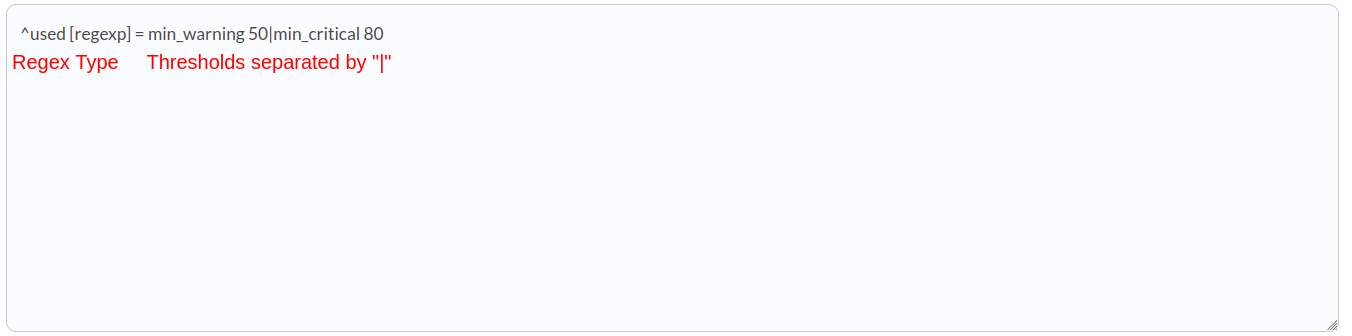
- Define tresholds: En este apartado se puede especificar umbrales que se aplicaran a los módulos. Se puede especificar un nombre de módulo que sera en el que se aplique el umbral, o un patron de regexp para añadir el umbral en los módulos que contengan ese regexp.


La sintaxis para especificar cada query se debe especificar en una linea diferente para cada umbral y es la siguiente :
< nombre modulo a aplicar el umbral, o patron de regexp > [< tipo, name si es un nombre o regexp si es patron ] = umbral, separando cada umbral por | >Por ejemplo si queremos aplicar umbrales a un módulo concreto:
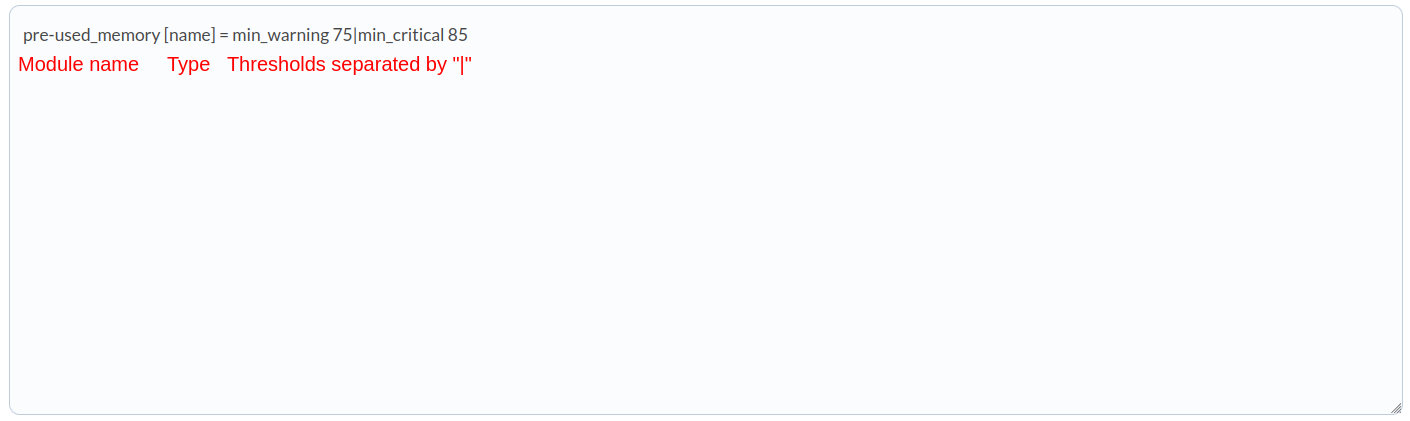
Si queremos aplicar umbrales a un grupo de módulos, determinados por un patron regexp :
- Custom queries: Bloque de configuración para definir las consultas personalizadas que se ejecutarán. Cada consulta generará un nuevo módulo para cada agente de la tarea.
La sintaxis para especificar cada umbral se debe especificar en una linea diferente para cada query y es la siguiente :
< nombre módulo > | < tipo modulo > | < nombre index > | < query > | < field (opcional) >Por ejemplo:
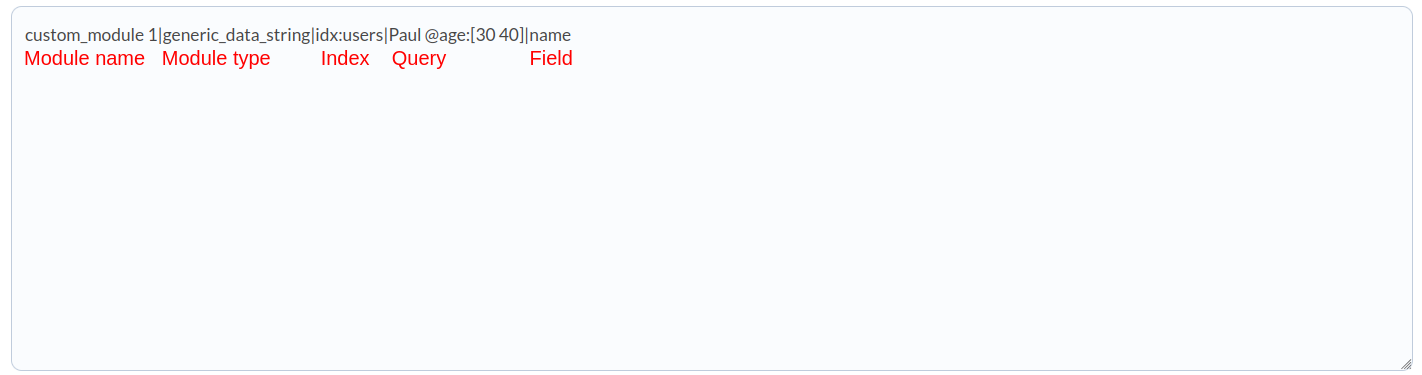
El apartado campo, sirve para especificar una "key" del documento en el que extraer el valor. Si no se usa, o si la query devuelve varios documentos, el valor sera los documentos en string.
Las tareas que se completen exitosamente dispondrán de un sumario de ejecución con la siguiente información:
- Total agents: Total de agentes generados por la tarea.

Las tareas que no se completen exitosamente dispondrán de un sumario de ejecución registrando los errores producidos.